
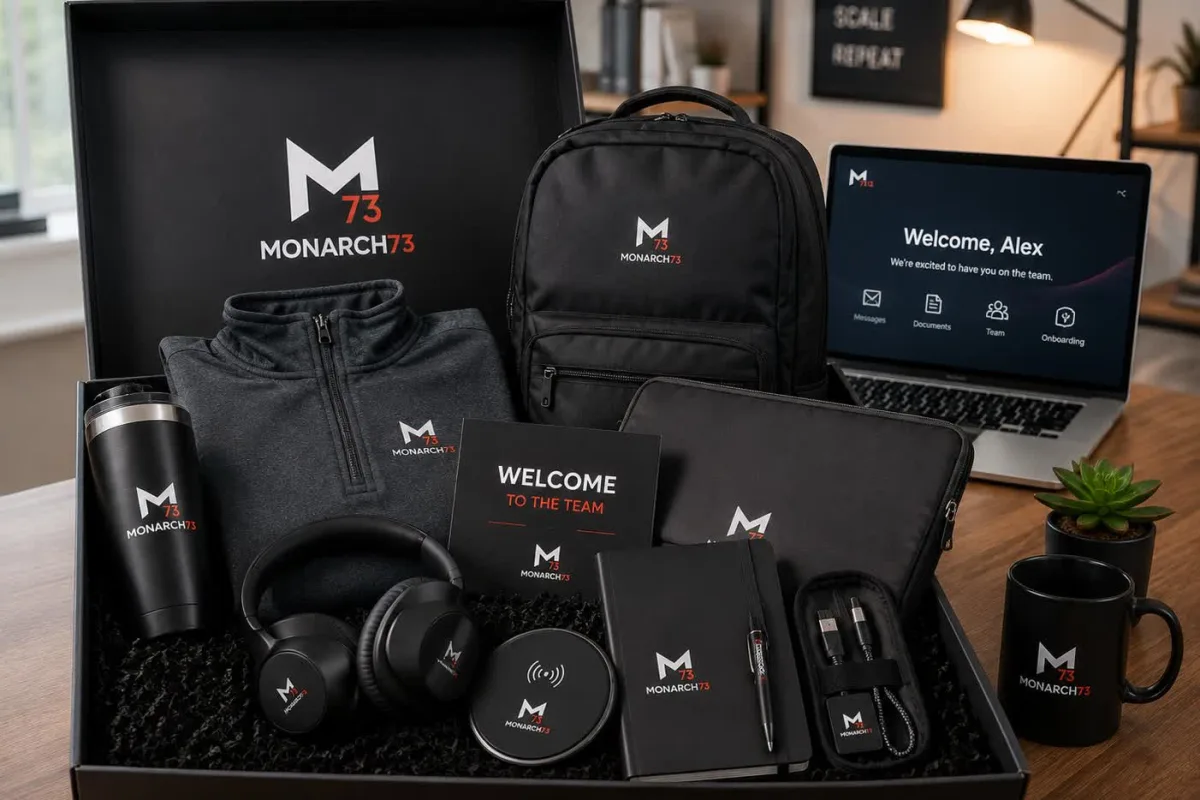
Pick and pack is the fulfillment step for programs that run continuously. Inventory is held; an order arrives; the specific items on that order are picked from stock, packed and shipped to the address on it.
It is what makes a merchandise program different from a merchandise order.
Why it needs held inventory
You cannot pick from stock you do not have. Pick and pack assumes a production run has already happened and the goods are sitting somewhere — which is why it usually arrives in a conversation alongside warehousing.
That is also its advantage: you buy at volume once and release one order at a time.
What it replaces
The alternative is producing per order, which means every request waits on a production run, or somebody keeps boxes in an office and posts things manually. Both are common and both scale badly.
Where it fits in a program
Employee orders through a store, replacement apparel, kits released against start dates, a facility ordering what it needs, a show drawing from season stock. Different fronts, the same operation behind them.
What to ask about
Whether orders can be associated with the department or location that placed them, whether inventory levels are visible, and what happens when stock runs low. Pick and pack without replenishment planning is just a slower way to run out.
The cost is per order, not per unit
This is the mental shift. Bulk delivery costs are dominated by the freight of one large shipment; pick and pack is dominated by how many individual orders are handled. A program with many small orders costs differently from one with few large ones, and it is worth modeling that early.
Kitting and fulfillment covers picking and packing, and warehousing covers the inventory behind it.