
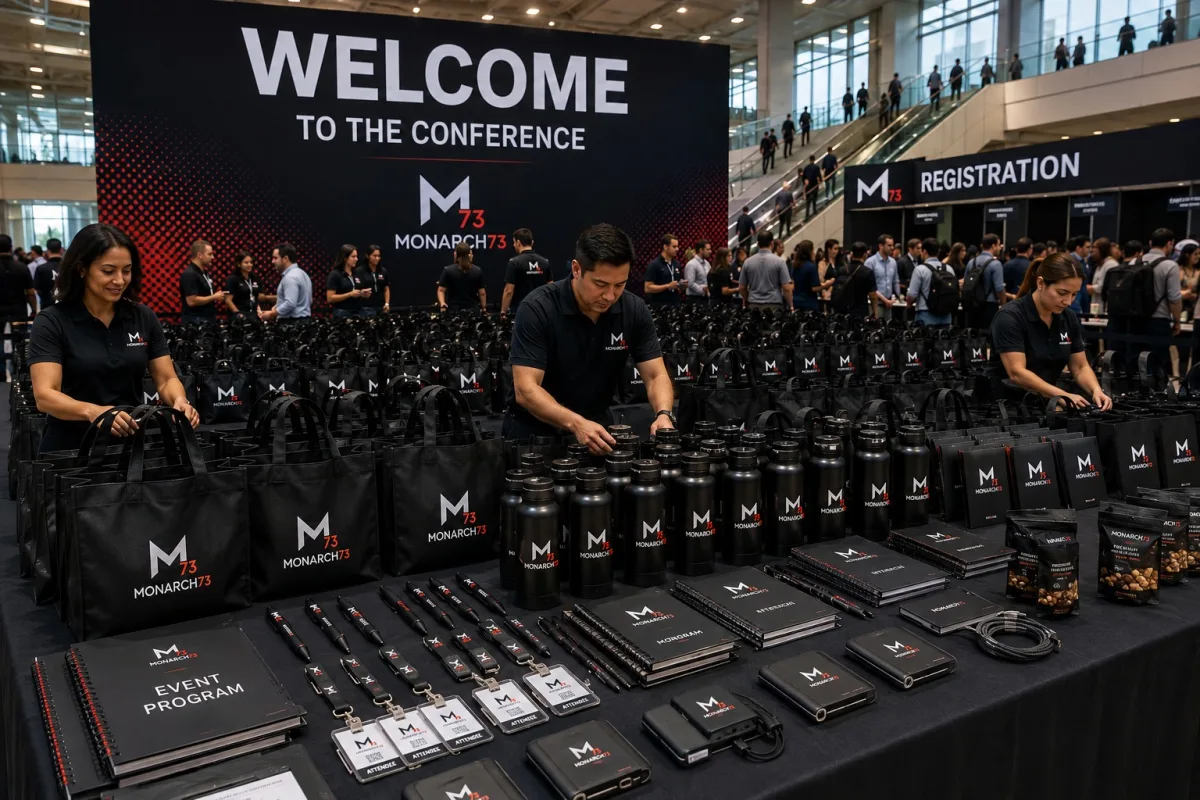
Kitting is taking several separate products and assembling them into one package — a welcome kit, an attendee bag, a gift box — to a specification that does not vary between units.
It sounds trivial. It is the part of merchandise programs that most often goes quietly wrong.
Why it is harder than it sounds
A kit with six components has six chances to be wrong per unit. Across two thousand kits, a small error rate produces a large number of incorrect boxes — and the failures are invisible until a recipient opens one. A missing sponsor insert in three hundred bags is discovered at the registration desk.
The specification is the product
Good kitting starts with an approved layout: which items, how many of each, in what arrangement, in which packaging. Once approved, that specification is what each kit is checked against, which is the difference between assembly and quality control.
Where personalization fits
Kits often vary by recipient — a name on an item, a different size, department-specific contents. That is a fulfillment task rather than an assembly one, and it works when recipient data is part of the process rather than a spreadsheet somebody reconciles by hand.
Kitting and fulfillment are different steps
Kitting builds the package. Fulfillment sends it — to one destination, to many locations, or to individual recipients. Some programs need one, most need both, and it is worth knowing which you are buying.
The alternative is somebody's evening
The realistic comparison is not kitting versus nothing. It is kitting versus a team assembling boxes in a meeting room the week before, which costs more than it appears to and produces less consistent results.
Kitting and fulfillment covers assembly and shipping, and custom swag boxes covers curated kits.