
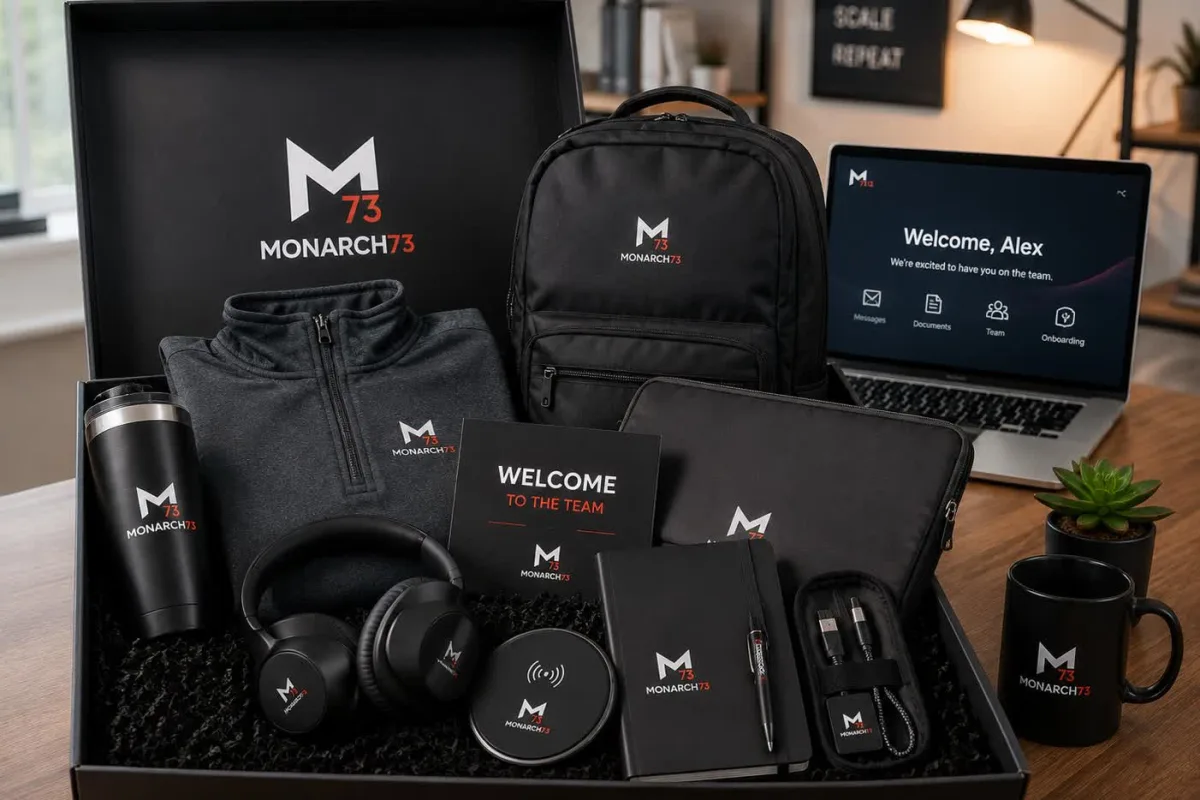
Technology onboarding kits face an unusual problem: the recipient probably owns better versions of half the things you might put in the box. A branded notebook competes with a laptop, and a cheap pair of earbuds competes with the ones already in their bag.
Aim at the desk, not the drawer
The things that survive in a home office are the ones that solve a daily annoyance: a hub that turns one port into several, a proper charging cable that is longer than the one in the box, a stand that raises a laptop to eye level, a decent webcam cover.
These are small, cheap relative to their usefulness, and used every day on camera.
One good soft-goods item
A quality quarter-zip or hoodie is the item people actually keep and wear, including on calls. It carries more goodwill than the rest of the kit combined, and the quality is immediately obvious — which cuts both ways.
A bag that survives a commute
For distributed teams the backpack is disproportionately used and disproportionately kept. It is expensive; it is also the item most likely to still be in service in three years.
Skip the things that date
Anything with a year, a funding round, a product version or a since-changed logo. Technology companies rebrand and pivot more than most, and dated merchandise ages badly and visibly.
Ship it to arrive before day one
A welcome kit that arrives in week three is not a welcome kit. That means held stock and start-date fulfillment rather than producing per hire — which is the operational half of this and the part most often missed.
Let them pick the size
Nothing undermines a good jacket like the wrong size. Let the employee choose it and enter their own address.
Technology programs covers distributed onboarding, and tech accessories covers what survives longest.