
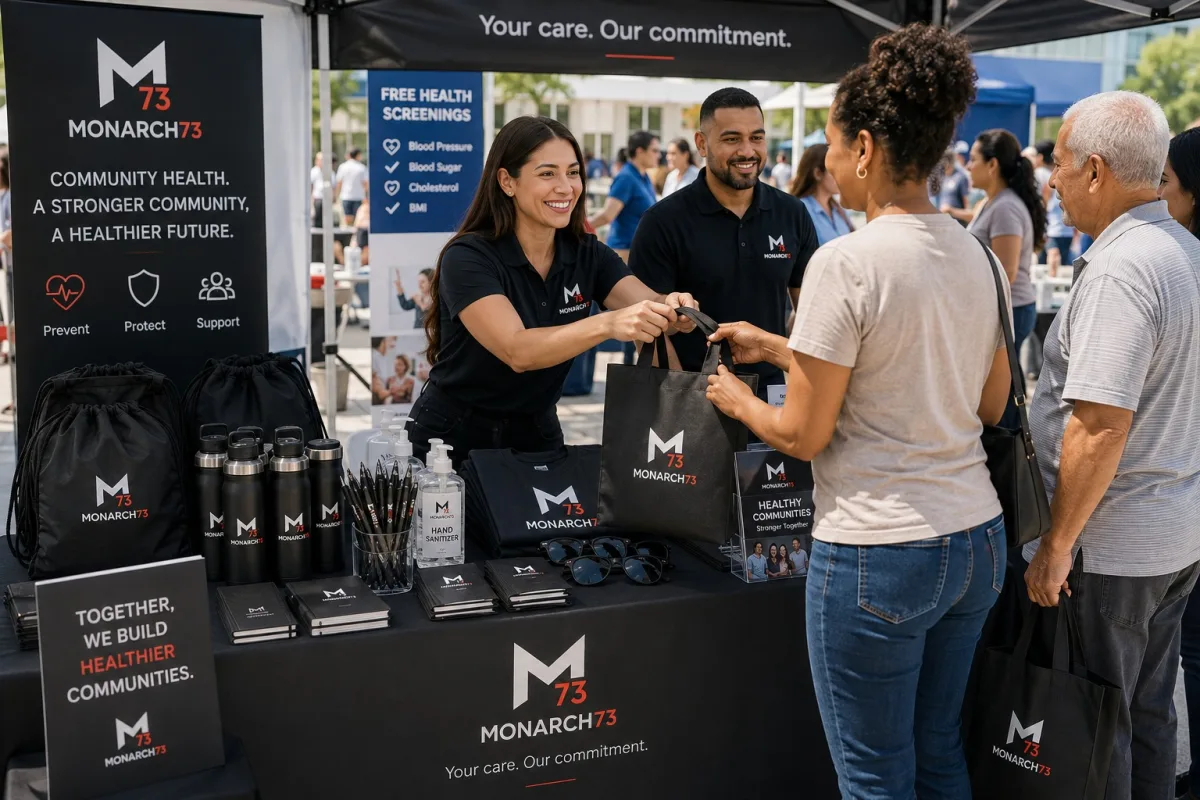
A health fair table clears out regardless of what is on it. That is not a measure of success — it is a measure of the items being free. The question is what is still in the house a month later.
Useful, and connected to the message
The items that work do a small ordinary job and sit near the behavior you are talking about: a water bottle at a hydration or wellness stand, a first-aid kit, hand sanitiser, a pill organizer, a reusable tote for the leaflets people are already carrying.
The connection matters. An item that relates to the message gets used in the context the message was about.
Print the resource, not the date
An item carrying a clinic phone number, an appointment line or a QR code to a resource keeps working after the event. An item carrying the event name and year is landfill the following week. Same cost, entirely different tail.
Plan for attendance you cannot forecast
Community event turnout is genuinely unpredictable. The way to be wrong safely is to choose undated items that go back into stock for the next fair, so an over-order becomes inventory rather than a write-off.
Tier the table
A high-volume item for everyone, something better for people who complete a screening or a conversation, and a small number of good items for community partners. That structure puts the spend where an interaction actually happened.
Run the year, not the event
Most health systems run several outreach events annually. Produced once at annual volume and held, each event draws what it needs — which is cheaper, more consistent, and removes the scramble before each one.
Healthcare programs covers community outreach, and warehousing covers holding a year's stock.