
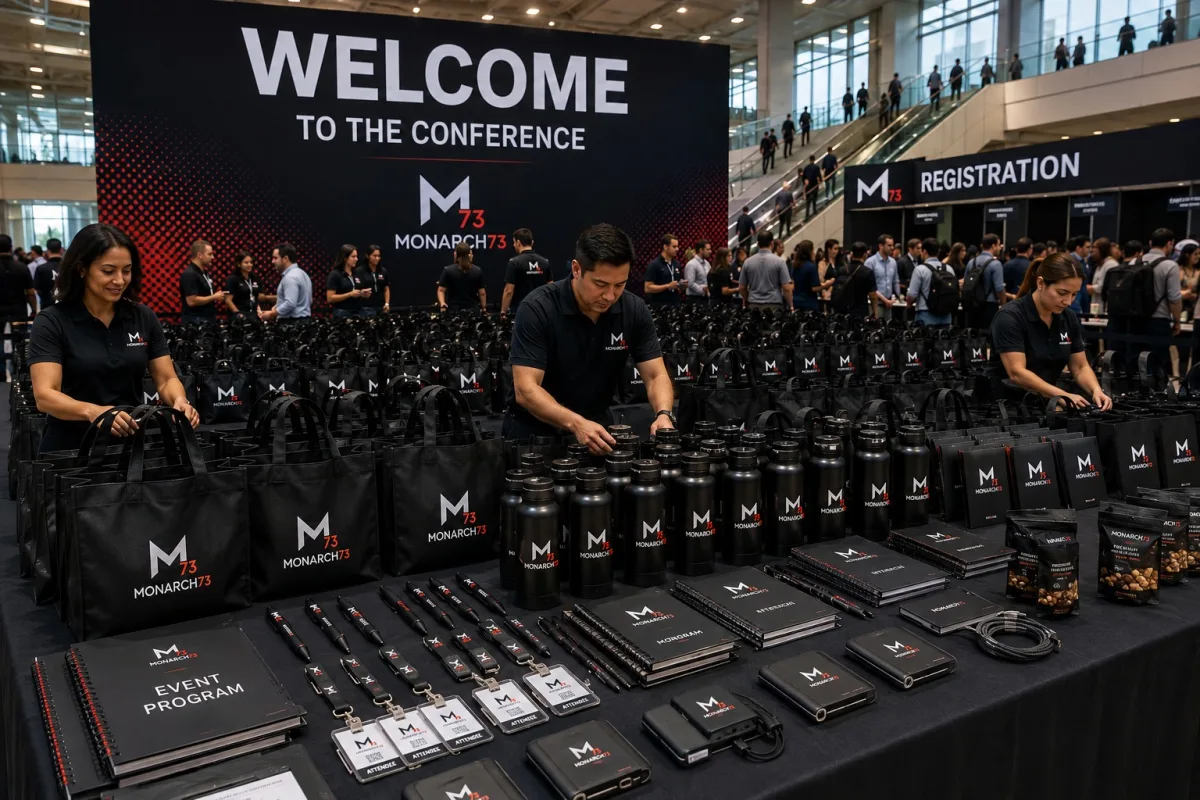
Show budgets are usually built from a unit price and an attendance figure. That produces the cheapest possible giveaway and the least useful one, because the metric being optimized is the wrong one.
Cost per unit versus cost per conversation
A cheap item handed to everyone has a low unit cost and a low return — most of it is discarded within the day. A better item given to people who actually stop and talk costs more per unit and far less per real conversation.
Both are legitimate. Deciding which you are buying is the budget decision.
Split the budget across tiers
General giveaway at generous volume, a better item for genuine conversations, and something properly good for speakers, sponsors and target accounts. Roughly, most of the units and a minority of the spend at the bottom; the reverse at the top.
Put freight in the number
Shipping to an advance warehouse, drayage at the venue and returning what is left are real costs that never appear in a merchandise quote. For a large show they can rival the merchandise itself, and they are the line that makes an approved budget wrong.
Order items that survive being wrong
Attendance forecasts are unreliable. Anything not printed with the event name and date can go to the next show, which turns an over-order into inventory rather than a write-off. This single choice does more for a show budget than any negotiation.
Budget the season, not the show
If you exhibit five times a year, five separate orders means five setups and five short-run prices. One season run held centrally is materially cheaper and more consistent.
Event programs covers ship-to-show, and sizing the quantity covers how many to order.