
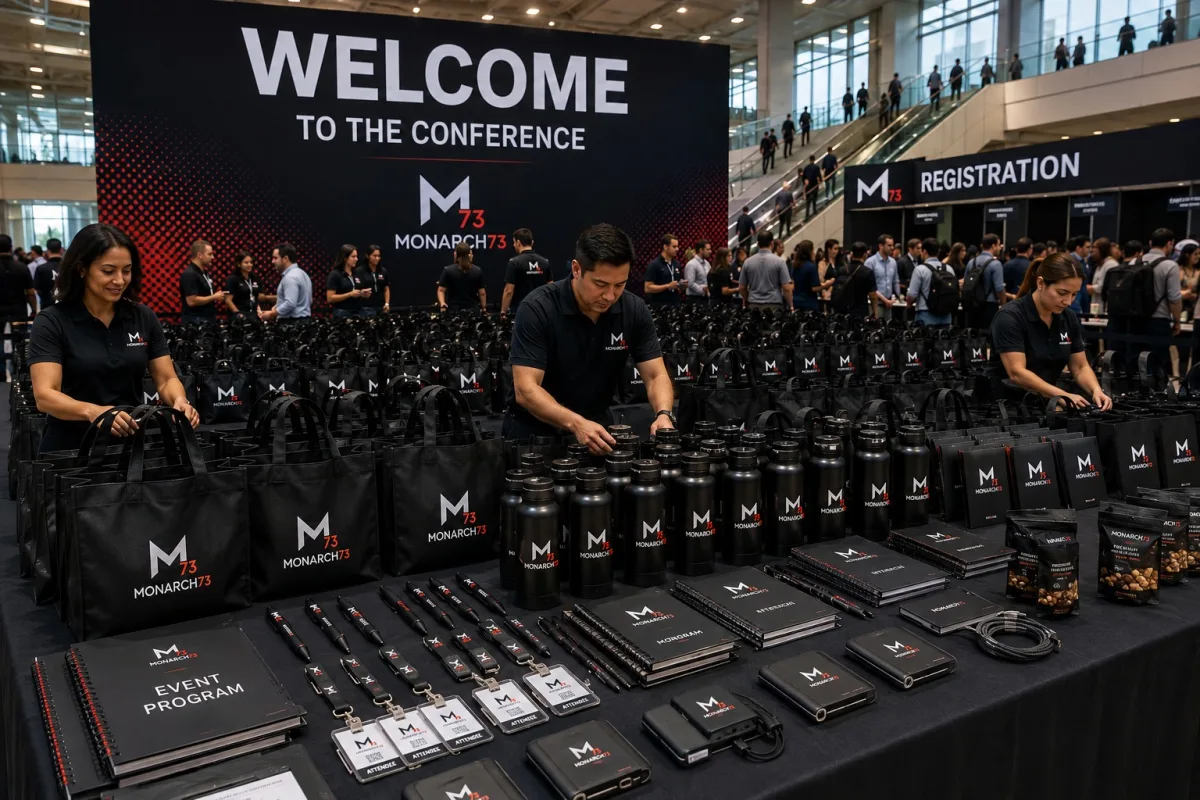
The two failure modes are running out on the first morning and shipping a pallet home. Both come from treating registered attendance as the quantity.
Registered is not attending, and attending is not collecting
Registration overstates attendance, often substantially for free events. Attendance overstates how many people reach your booth. And not everyone who reaches it takes something — or takes only one thing.
For a bag handed to every attendee at registration, attendance is roughly right. For a booth giveaway, the number is a fraction of it, and the fraction depends on where you are on the floor.
Order to the tier, not the total
Splitting the giveaway across tiers makes the estimate easier, because you only have to be approximately right about the cheap item. General giveaway at generous volume, the better item at the number of real conversations you expect, the premium gift at a list you already have.
Choose items that survive being wrong
This is the decision that matters most. Anything not printed with the event name and date can go to the next show. A surplus of dated merchandise is a write-off; a surplus of good undated bottles is inventory.
Print the year on nothing you might want to use again.
Round up on the cheap and down on the expensive
Running out of the low-cost item looks bad in front of everybody. Running out of the premium gift is a conversation with a handful of people. Weight the risk accordingly.
Ask the organizer the right question
Not “how many are registered” but “what was actual attendance last year, and how many exhibitors were there”. Both numbers are usually available and both are more useful.
Plan the surplus before you order it
If it is going back into stock, say so at the start so it is packed to travel and returned rather than left behind.
We handle attendee merchandise at conference volume, and warehousing covers holding surplus between shows.