
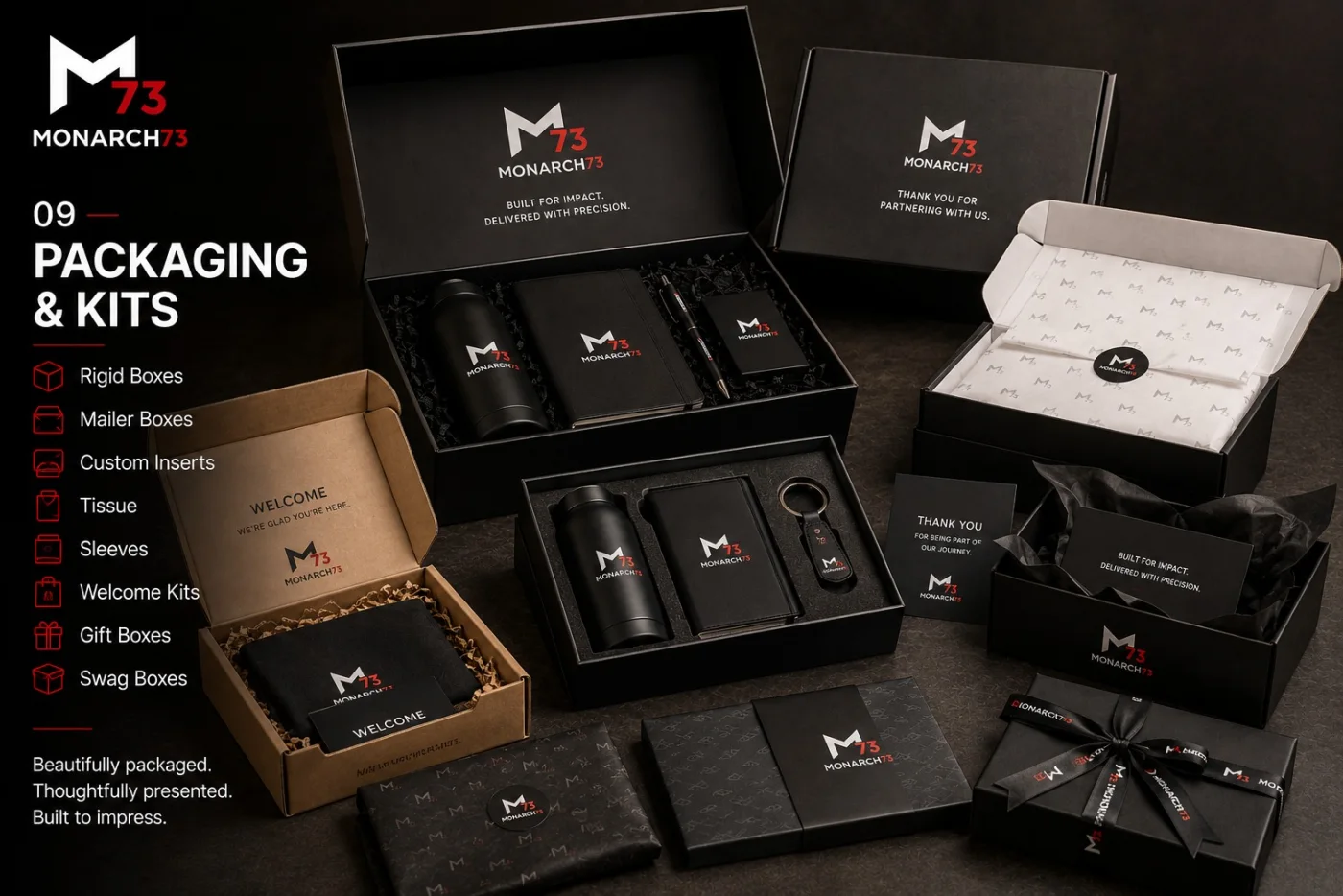
Packaging gets budgeted last and cut first, which is odd given it is the first thing a recipient sees and the thing that decides whether a good product reads as a gift or as a delivery.
Stock, stock-branded, or fully custom
Three routes at very different prices. A stock box with a printed sticker or sleeve is cheap and quick. A stock size printed to your artwork is the middle. A rigid box made to your dimensions, with a custom insert, is a manufactured product with tooling, minimums and lead times to match.
Most programs over-specify this. A well-chosen stock box with a good sleeve and tissue outperforms a mediocre custom one.
The insert is usually the cost
A moulded or die-cut insert that holds each item in place is what makes an unboxing feel designed. It is also frequently more expensive than the box, because it is bespoke to the exact products going inside — which means it cannot be finalised until the contents are.
Rigid versus mailer
Rigid boxes present better and cost more, and they are heavier, which shows up again in shipping. Mailers ship cheaply and take a beating in transit. If the kit is going to individual recipients by post, that trade matters.
Size drives shipping, and shipping is per unit forever
An oversized box costs more to buy and more to ship on every single unit. Sizing the packaging to the contents rather than to the impression is one of the few decisions that saves money twice.
Lead times are longer than the products
Custom packaging routinely takes longer than the merchandise going inside it. Plan the box on the same schedule as the products, not after them.
Custom swag boxes covers packaging and assembly together, and kitting covers building to a fixed specification.