
A company exhibiting five or six times a year usually orders five or six times a year, each against its own deadline, each at short-run pricing. It is the most expensive way to run a season and it is the default.
Split the merchandise into two lists
Event-specific items — anything with a show name or date — have to be produced per show. Everything else — apparel, drinkware, bags, tech accessories, banners, table covers — does not.
The second list is usually most of the spend, and it is the list that should be produced once.
Produce the season, hold it, draw from it
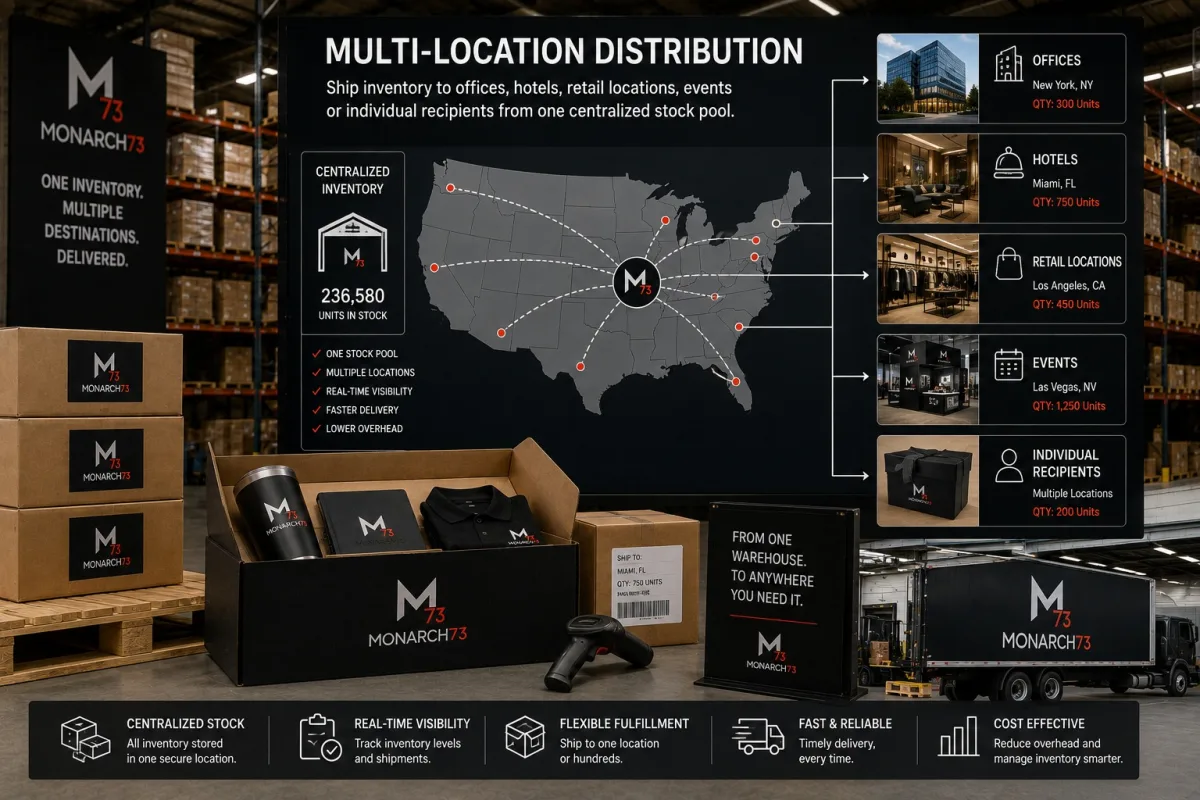
One run at season volume earns a better unit price than five short runs, and removes four setups. Each show then draws what it needs from held stock, which also means the giveaway at show five looks identical to show one.
Plan replenishment against the calendar
Inventory visibility is what turns this from a stock pile into a program. Knowing what is left after each show, and what the next three need, means reordering on a schedule rather than discovering a shortfall the week before.
Bring the surplus home
Undated material left behind at a venue is money spent twice. If it is going back into stock, arrange the return in advance and pack it to travel — that decision has to be made before the show, not on the last afternoon.
One calendar, visible to everyone
Most of the panic in event merchandise comes from a show being added late or a date moving. A single view of the season's dates, receiving deadlines and stock levels is what lets that be absorbed rather than escalated.
Warehousing covers holding season stock, and event programs covers drawing from it show by show.